
Feminist Theatre

Past

The Forgotten History of Mastaneh-Female Voices in Farsi (Persian)

“Voices from Iran, heard many years later”

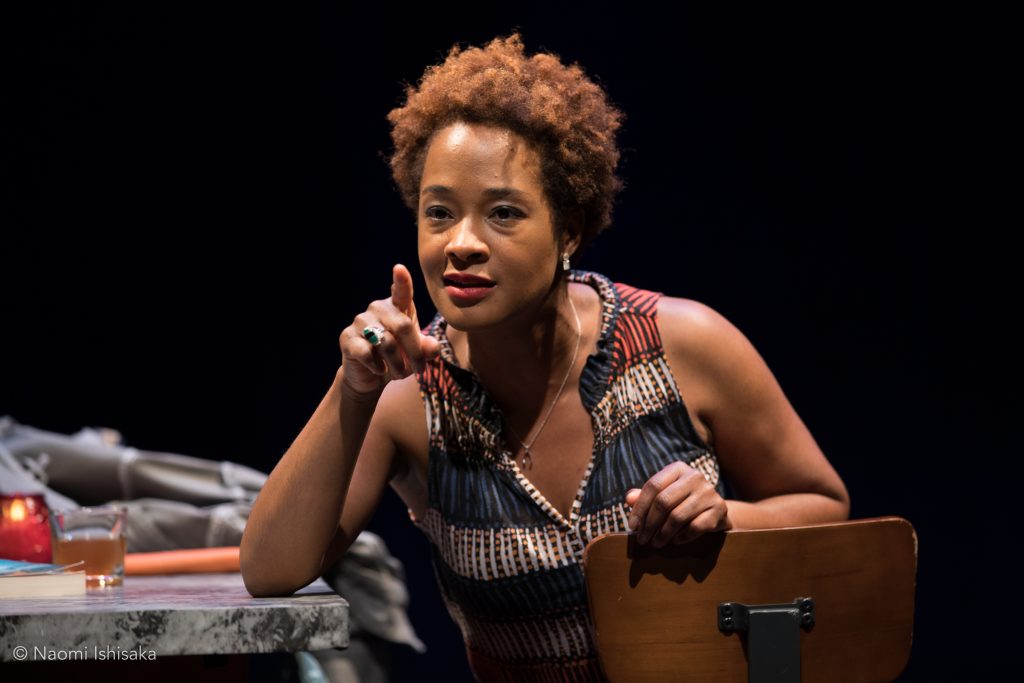
The Seda Iranian Theatre Ensemble performed their first play, The Forgotten History of Mastaneh, Friday night to a sold-out audience. Unsurprising, as Iranian playwright and director, Naghmeh Samini, hosts a number of impressive writing credits to her name and her work has been staged internationally. The stars of the evening were lead actor Mozdeh Rahmanzaei whose powerful performance was honest, genuine, and charismatic, and fellow actor Newsha Farahani, who gave us an intimate portrayal of female friendship.
Past

Like Penelope, MAIDEN VOYAGE Waits for Greatness

In the world of adapting ancient stories, inventing “the history behind the myth” is the order of the day. From Wolfgang Peterson’s film Troy to Esther Friesner’s young adult novel Nobody’s Princess, modern artists are bringing us “believable” versions of Homer’s epics, devoid of gods and monsters, and Parley Productions’ Maiden Voyage falls squarely within this trend.
True to its subtitle, “A Feminist Reimagining of The Odyssey,” Maiden Voyage weaves us a history behind the myth in which Penelope, the true author of The Odyssey, spins tales of her absent husband’s encounters with gods and monsters in order to raise a son longing for a father he has never known.

Past

Tall Girls

What’s a Tall Girl to do During the Depression?

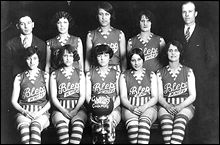
Produced by Washington Ensemble Theatre and directed by Kelly Kitchens, Meg Miroshnik’s play about teenage aspirations amidst hopelessness during the Dust Bowl, Tall Girls opened at 12th Ave Arts. Unfortunately, the play and this production reflected the themes presented in the play-high aspirations but a fairly hopeless outcome.

Past

The Secretaries

The “Girls” at Work are Not What You Expect.

As a compliment, Oscar Wilde would not call The Secretaries, which opened at Theater Schmeater, “a well-made play”. Although sometimes referred to as Surrealist, I would call it Expressionist. That is to say, it does not rely on realism, nor a structured plot, but rather creates a lot of extremely emotionally-charged images, as it ambles through the “initiation” period of a new secretary, in the all-female office of a lumbering company in rural Oregon.

Scroll to Top