Author name: Mark Douglass

Past

“Questionable Content” Returned for One Night Only to Pocket Theater

After a rousing warm-up and welcome to Pocket Theater by Clayton Weller, David Rollison ably stepped up to Host the evening. Very quickly he got the two teams on stage. The team seated to the audience’s right: And Yet They Persisted—Sarah Skilling, Bridget Quigg and Mike Masilotti. On the left side of the stage sat Endangered Reese’s Pieces: Phill Arensberg, Tyler Schnupp, and Greg Stackhouse. All of the panelists were sketch comedy, improv theater, or stand-up comedy veterans. In the center of the stage is a screen for video projection. The “sidekick” and Scorekeeper for the show was Martin Stillion.

If you’ve accidentally landed on NPR’s Wait, Wait, Don’t Tell Me imagine that cranked up to top speed.


Past

“Shot” Disrupts Our Comfort Zones

World Premiere
“Not everything that is faced can be changed, but nothing can be changed until it is faced.” ~ James Baldwin

Law enforcement officers—police officers—now have an infamous reputation for killing unarmed people of color of all ages and genders. This s not new, of course, essayist James Baldwin wrote about it decades ago, and comedian Richard Pryor joked about police accidentally “breaking” black suspects by using the illegal strangle hold. But the murder of Michael Brown and the spontaneous birth of Black Lives Matter has held a spotlight on this problem unlike any attention paid to it before now.

Past

Book-It Brings ‘Treasure Island’ to the Stage

Nearly 13 year old Jim Hawkins (Alex Silva) lives and helps out at the Admiral Benbow Inn with his father (unseen) and mother (Gin Hammond). A mysterious stranger, “Captain” Billy Bones (Jim Gall), arrives and asks Hawkins to keep a look out for a man with a wooden leg. But Bones is found, and he gets first one and then a second unwelcomed visit by pirates looking for him and the map he holds of buried treasure.

Past

“White Rabbit Red Rabbit” Questions Obedience to Authority

What can a censored artist do?

I watched the Seattle premiere of a play in search of a genre: White Rabbit Red Rabbit By Iranian Nassim Soleimanpour at 18th and Union. Billed as a one-act play for an actor that has never read the script, the show also draws into the performance lots of people in the audience.

In the role of “the actor” this evening was Kate Jaeger. Most recently she served as the co-host of this year’s Gregory Awards.

Past

“The Fever” by Wallace Shawn

In theater and movies fevers, like dreams, play a special role. In North American culture, they cue us to thinking what is expressed is coming from the deepest and unfiltered parts of our unconscious minds. So from the title alone we are to understand this is a stream-of-(un)consciousness work, and Wallace (Wally) Shawn holds tight to this trope to present his audience with the uncomfortable realities of being white and of the privilege classes in America.

Shawn wrote this in 1990. He could have written this for 1940 or 2040. It’s the nature of the luck of being born privileged

Past

Book-It Adapts “A Book for the Time Being”

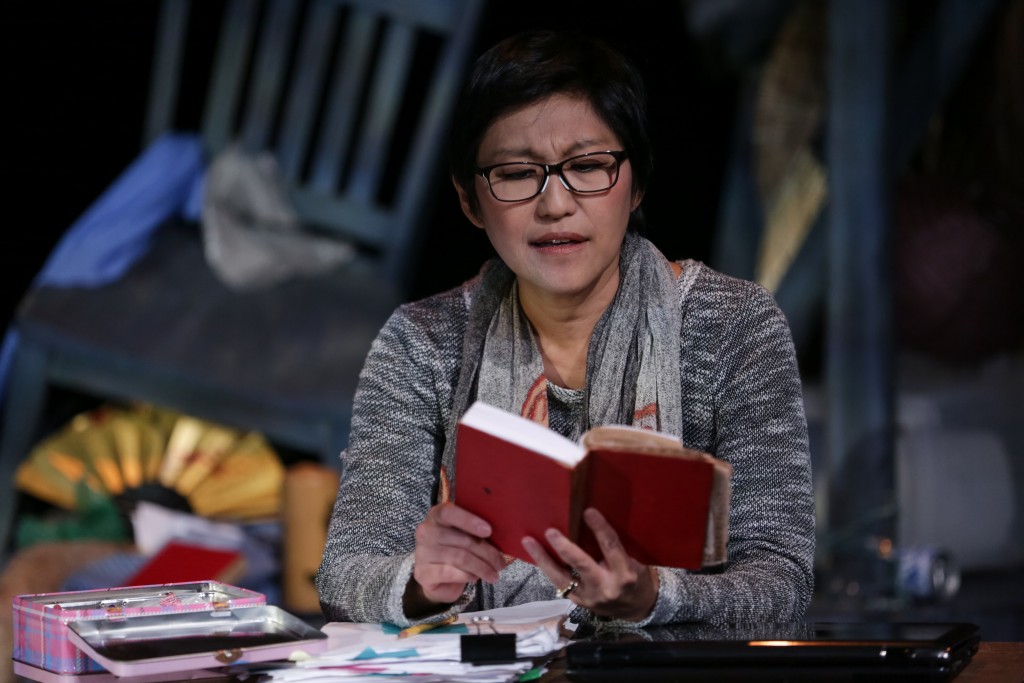
A Book for the Time Being is a 422 page novel by Ruth Ozeki published in 2013. In the 2 hours and 40 minutes runtime of this play, Book-It packs in a lot in on topics such as: online and physical bullying, loneliness, depression, suicide across generations, Buddhism, dementia, environmental pollution, animal familiars, and (in passing) quantum physics! It was indeed a Herculean task to bring this unwieldy novel to the stage. Chiang and Ferri pull it off with aplomb.

Director Desdemona Chiang is a genius.

Past

“The Wedding Band” by Alice Childress

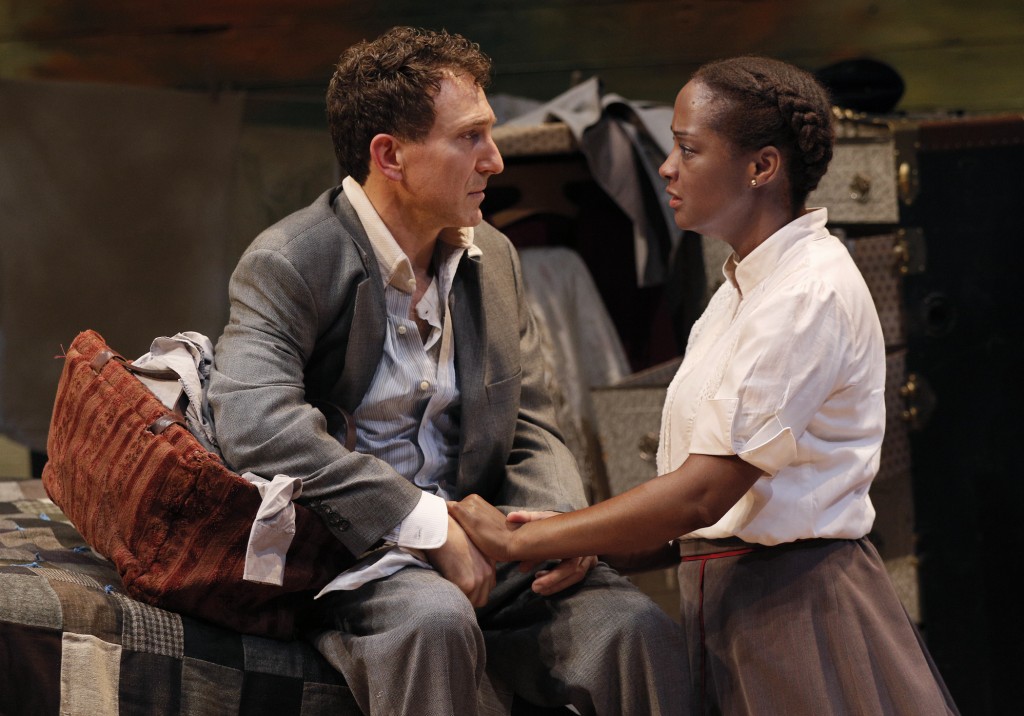
Alice Childress completed Wedding Band in 1962. It is set in rural South Carolina during World War I. Lovers Julia (a black seamstress played with heartbreaking sincerity by Debra Woods) and Herman (a white baker played from a brave heart by Chris Ensweiler) want to get married. They have been lovers for 10 years, and over that time Julia has had to move frequently. She longs for a place where they can be open with their affections and not have to deal with bigotry—from either blacks or whites. She is very much alone.

Is it necessary to remind you that South Carolina is in the Jim Crow south?

Past

Loose Rhinoceros About—What’s a Person to Do?

Eugene Ionesco’s play Rhinoceros (1959) grew from his increasingly lonely witness to the attraction that Nazism held among the circles he traveled in during World War II. Ionesco (b. 1909, Slatina, Romania—d. 1994, Paris, France) and many of his friends would have been around 20 in 1939, the prime age for idealist fervor.

Strawberry Theatre Workshop intentionally produced this play to highlight the challenges of our current presidential election climate. Jess K. Smith’s direction found the play’s

Scroll to Top